I am usually quite hesitant to talk about the issue of sleep because it feels hypocritical coming from me. I struggle with sleep, and I have for a long time. It therefore feels ironic to speak to anyone about the benefits of sleep and how to get good sleep when I would benefit from this advice the most.
Or perhaps this is precisely why I am well placed to do so. Having lived on the other side, I understand how unsustainable poor sleep habits are, and the heavy consequences borne by those for whom quality sleep is a luxury rather than a given.
My struggles with sleep allegedly started in infancy. My mother claims that I would reserve whatever sleep I had for the day, then rise proudly and piercingly loud at night, much to the anguish of those tasked with babysitting me after a long day of being adults. She concluded that I would grow up to ply some nocturnal trade.
I have always found it easier to stay up late to work, study, or think, and then sleep in the wee hours of the morning, starting my day in mid-morning. When visitors came to my mother’s house, I would often be asleep, and the conclusion was that I must be very lazy, especially being a boy. What do you mean by sleeping during the day?
At school, I struggled with early mornings from primary school all the way through university. Missing many morning classes meant compensating with long hours of self-study, covering what others had already been taught. When I eventually began working on a vocation that required night shifts (prophetic, in hindsight), I excelled at working through the night but frequently clashed with my daytime supervisors.
The struggle to do what came naturally to me was constantly at odds with how the world around me was ordered. Often, I had to adapt. Adaptation inevitably meant shorter hours of sleep, dependence on an alarm clock, and persistent daytime fatigue.
This is a familiar story for many of us. Call it different versions of the same book.
Many are driving with the handbrake on.
Irritable. Fatigue. Headaches. Difficulty concentrating. Less productive, or entirely unproductive.
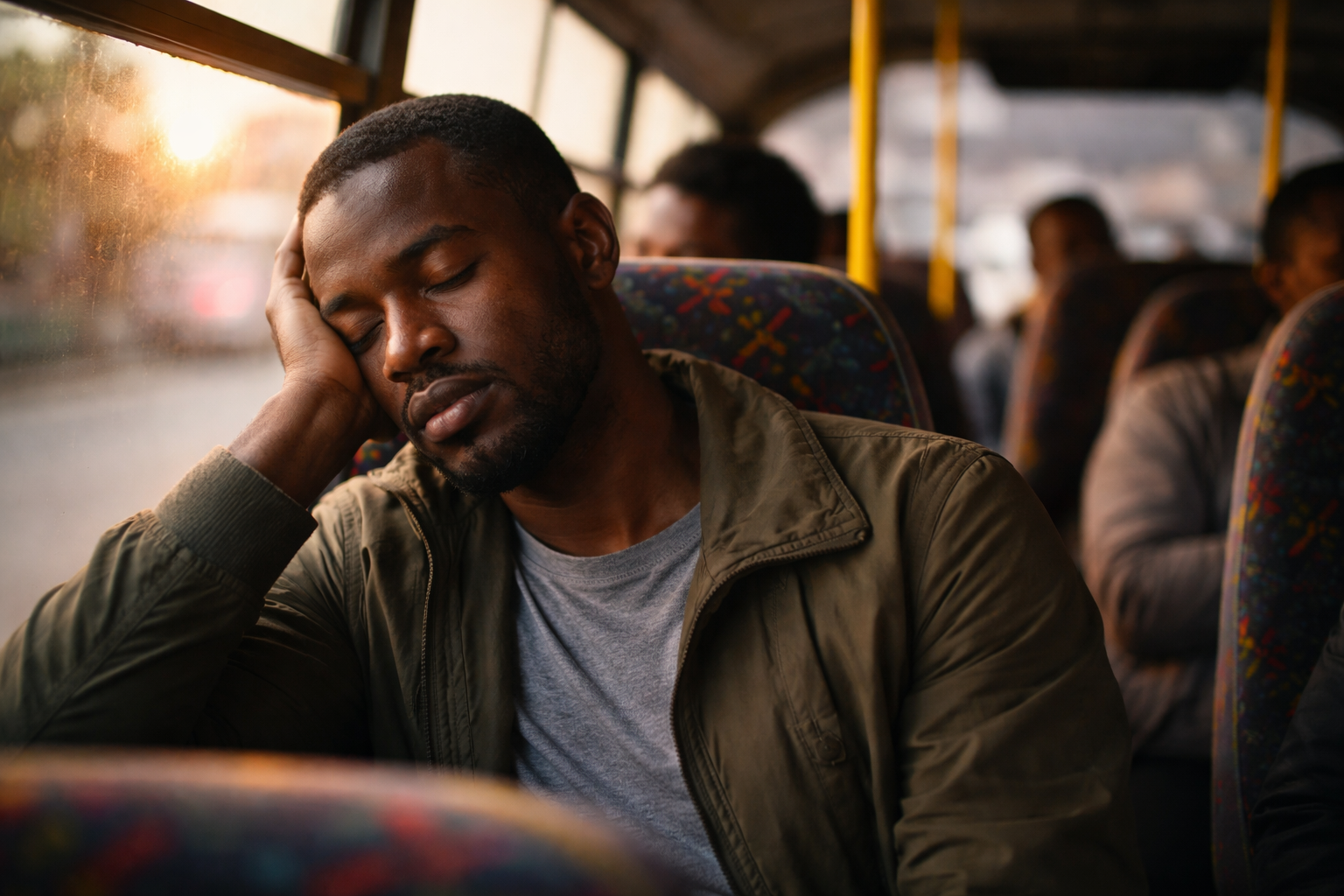
And you know this is true. Morning coffee is not optional; it is a ritual. Alarm clocks so loud that they could be heard on the moon, yet they are snoozed in unison. People steal winks early in the morning, when they should be most fresh and energized from a good night’s rest. In offices, classrooms, and public transport, you see it everywhere. Wake up early to go to work. Sleep on the way to work. Sleep at work. Sleep on the way home from work.
If you are so tired that you fall asleep at every available opportunity, is it possible that this is your most cognitively alert and productive self?
I would never have begun to take the issue of sleep seriously had two things not happened.
The first was that I began working with mental health patients. In these five years, I can state with certainty that poor sleep, or the lack of it, has been the single most common symptom I have encountered. Sleep is a massive problem, and when it is bad, it is profoundly distressing. This made me curious about sleep and what it truly is.
Then the second thing happened: I read Why We Sleep by Matthew Walker. It is a deeply insightful book, and if you didn’t think sleep was a big deal, it turns out there is an entire branch of medicine dedicated to it: sleep medicine.
With my curiosity piqued, my own challenges with sleep came into sharper focus. I needed to help myself, but I also realized that this was not a problem unique to me. Many others were battling it too, knowingly and unknowingly. Some were fighting to stay awake in environments that demanded alertness. Others were desperately searching for elusive sleep. Still others believed they could survive on three hours a night and that their bodies would simply adapt and move on.
Sleep is a biological urge. The longest time on record without sleep is 18 days, 21 hours, and 40 minutes. The Guinness World Records no longer recognizes attempts to break this record because of the serious health concerns associated with both acute and chronic sleep deprivation.
All animals sleep. Even those in extremely dangerous environments, surrounded by predators, find ways to sleep while flying, while swimming, or even by resting one hemisphere of the brain at a time. Nobody escapes sleep. Nobody should.
Learning about sleep continues to be a deeply fascinating journey, and hopefully one I can convince you to join me on. Learn a few crucial things. Sleep better. Sleep longer. Get more life out of your days.
Sleep is not for the weak.